
Description
Product Overview
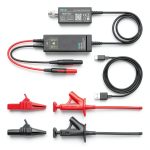
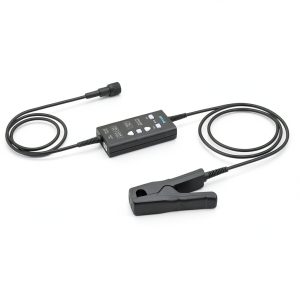
RIGOL’s RP1025D high‑voltage differential probe is engineered for engineers and technicians who need reliable, high‑speed measurement of large voltage differentials on modern oscilloscopes. With a maximum input range of 1400 Vpp (approximately 500 Vrms) and a DC‑25 MHz bandwidth, the probe captures fast transients and low‑frequency signals without distortion. The probe offers three selectable attenuation ratios—20 ×, 50 ×, and 200 ×—allowing users to adapt the scaling to the signal amplitude and maintain optimal signal‑to‑noise ratio. Its differential input impedance of 4 MΩ paired with a 1.2 pF capacitance minimizes loading on the circuit under test, while the 50 Ω output matches standard oscilloscope inputs for accurate voltage representation. Constructed from a rugged metal housing, the RP1025D withstands the rigors of laboratory and field environments, and the included accessories such as dual‑BNC coaxial cable, dual‑banana plug silicon cable, power adapter, and safety clips provide a complete measurement solution right out of the box.
The probe’s physical dimensions—8.43 × 1.38 × 2.36 inches—and its lightweight 9.9‑ounce construction make it easy to handle during prolonged measurement sessions. The housing is fabricated from high‑impact ABS plastic with a matte finish that resists fingerprints and scratches, while the internal circuitry is shielded to protect against electromagnetic interference. The probe’s connector suite includes a dual‑BNC coaxial output for direct attachment to standard oscilloscope inputs and a dual‑banana plug silicon cable for secure connection to high‑current test points. All cables are rated for the probe’s maximum voltage, ensuring consistent performance across the full 1400 Vpp range. The included AC power adapter supplies a stable 12 VDC source, eliminating the need for external batteries and providing uninterrupted operation in laboratory environments.
Safety is a core consideration in the RP1025D design. The probe incorporates a built‑in safety IC clip and an alligator clip that limit the voltage applied to the user’s hands, reducing the chance of accidental shock. The differential input stage isolates the measured voltage from ground, allowing the probe to handle high‑potential differences without creating ground loops. The probe’s maximum differential voltage rating of 1400 V (DC+AC peak‑to‑peak) and a 600 Vrms voltage‑to‑ground limit protect both the instrument and the operator. The probe also features a clear labeling system indicating the selected attenuation ratio, and a lockable switch prevents accidental changes during measurement. These safety mechanisms comply with IEC 61010‑1 standards for laboratory equipment, providing confidence for users in demanding test environments.
The RP1025D’s electrical specifications are designed to meet demanding test requirements. The probe’s rise time of 14 ns ensures that edges as fast as 25 MHz are faithfully reproduced, while the input capacitance of 1.2 pF (differential) and 2.3 pF (single‑ended) keeps loading effects minimal. The probe’s output impedance of 50 Ω matches standard oscilloscope inputs, providing a flat frequency response across the specified bandwidth. Accuracy is maintained within ±2 % across all attenuation settings, and the probe’s temperature coefficient is limited to 0.1 %/°C, guaranteeing stable performance in varying laboratory conditions. The device is calibrated at the factory and includes a calibration certificate that can be used for periodic verification.
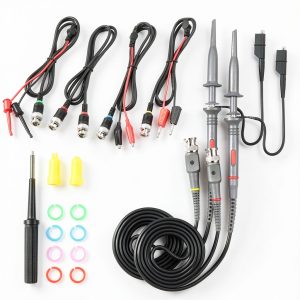
The package includes a user’s guide that outlines step‑by‑step installation, calibration, and safety procedures, as well as a dual‑BNC coaxial cable for direct connection to the oscilloscope’s input, a dual‑banana plug silicon cable for high‑current test points, an AC power adapter for reliable power, a safety IC clip for low‑voltage protection, and a safety alligator clip for high‑voltage isolation. Each accessory is rated for the probe’s maximum voltage, ensuring consistent protection and performance. The cables are color‑coded to simplify setup, and the connectors feature strain‑relief boots to prevent damage during repeated use.
![[Product front view showing all components]](https://www.bakeryhub.store/wp-content/uploads/2026/06/08adad0c0f9c4e76b2d9aff7d906502b.jpg)
Usage
The RP1025D excels in a variety of testing scenarios, from power electronics and motor drive verification to high‑voltage automotive systems and renewable energy converters. Its wide input range makes it suitable for probing the output of inverters, the switching nodes of DC‑DC converters, and the high‑potential points of battery management circuits. Because the probe is differential, it can safely measure voltage differences without referencing ground, reducing the risk of ground loops and protecting both the operator and the equipment. The included dual‑banana plug silicon cable offers a secure connection to high‑current test points, while the dual‑BNC coaxial cable delivers the signal to the oscilloscope with minimal loss. The probe’s compact size and lightweight design allow it to be positioned in tight spaces, and the optional safety alligator clip and IC clip provide additional protection when working with live circuits.
In automotive powertrain development, the RP1025D is used to monitor the high‑voltage bus of electric vehicle drivetrains, capturing switching transients of inverter modules and validating insulation performance. In renewable energy testing, engineers employ the probe to observe the output waveforms of photovoltaic inverters and wind turbine converters, ensuring that voltage spikes remain within design limits. The probe’s ability to measure both DC and AC components makes it valuable for battery management system diagnostics, where precise voltage differentials between cells must be tracked. Additionally, the probe is suitable for educational laboratories, allowing students to safely explore high‑voltage concepts without risking equipment damage. Its compatibility with a wide range of oscilloscopes, from entry‑level to high‑end models, ensures that users can integrate the RP1025D into existing test setups without additional adapters.
To obtain accurate measurements, users should first select the appropriate attenuation ratio based on the expected signal amplitude. For signals up to 140 Vpp, the 20 × setting provides the best resolution, while the 50 × setting is optimal for mid‑range voltages up to 350 Vpp, and the 200 × setting handles the highest voltages up to 1400 Vpp. After selecting the ratio, the probe should be calibrated using the built‑in calibration routine or an external reference source. Proper grounding of the oscilloscope and careful routing of the coaxial cable minimize noise pickup. When measuring differential signals, the probe’s differential inputs should be connected across the two points of interest, and the ground reference should be left floating to avoid creating ground loops.
The RP1025D complies with IEC 61010‑1 safety standards for laboratory equipment and is CE marked for use in European markets. Its design incorporates over‑voltage protection and isolation barriers that meet the required creepage and clearance distances for high‑voltage applications. Users operating the probe in regulated environments should follow the manufacturer’s safety guidelines, wear appropriate personal protective equipment, and ensure that the probe’s safety clips are engaged when working with live circuits. The probe’s robust construction also meets RoHS directives, limiting the use of hazardous substances in its components.
Why Choose Us
Choosing the RP1025D means selecting a probe that combines precision engineering with practical convenience. RIGOL backs the product with a one‑year warranty and a reputation for durable, high‑performance test equipment. The probe’s 14 ns rise time ensures that fast edges are captured faithfully, and its ±2 % accuracy across the full attenuation range guarantees reliable data for design validation and troubleshooting. The included user’s guide walks users through setup, calibration, and best‑practice measurement techniques, reducing the learning curve for new users. Additionally, RIGOL’s customer support team offers technical assistance and replacement parts, ensuring that any issues are resolved quickly. This comprehensive support package, together with the probe’s robust construction and superior electrical performance, makes the RP1025D a cost‑effective choice for both small labs and large production facilities.
RIGOL’s manufacturing process follows strict quality control protocols, including automated testing of each probe’s attenuation accuracy, bandwidth, and rise time before shipment. The components are sourced from reputable suppliers, and the probe’s PCB layout is optimized to reduce parasitic inductance, enhancing high‑frequency performance. The product is backed by a comprehensive one‑year warranty that covers defects in materials and workmanship, and RIGOL offers an extended service plan for organizations that require longer coverage. Technical documentation, including a detailed user’s guide and calibration certificates, is provided in both PDF and printed formats. For customers needing custom solutions, RIGOL’s engineering team can advise on probe selection, cable routing, and shielding strategies to meet specific application requirements. This blend of robust engineering, thorough documentation, and responsive support distinguishes the RP1025D as a reliable tool for precision measurement.
RIGOL’s after‑sales service includes a dedicated technical support hotline staffed by engineers familiar with high‑voltage measurement challenges. Customers can access online resources such as firmware updates, application notes, and troubleshooting guides. For organizations that require on‑site assistance, RIGOL offers field service contracts that provide rapid response times and spare part logistics. Training workshops are available to teach best practices for using differential probes, covering topics such as probe compensation, signal integrity, and safety procedures. This comprehensive support ecosystem helps users maximize the value of their investment and maintain measurement accuracy over the product’s lifespan.
RIGOL is committed to sustainable manufacturing, and the RP1025D is produced using recyclable materials and energy‑efficient processes. The probe’s low power consumption, combined with the optional use of an external AC adapter, reduces the environmental impact compared to battery‑powered alternatives. Packaging is minimized and made from recycled cardboard, and the product complies with WEEE directives for responsible electronic waste disposal. By choosing the RP1025D, customers not only gain a high‑performance measurement tool but also support environmentally responsible practices.
Key Features
- High‑voltage capability up to 1400 Vpp for testing powerful circuits safely.
- Three attenuation settings (20×, 50×, 200×) give flexible scaling for any signal level.
- Fast 14 ns rise time captures rapid transients without distortion.
- Robust 4 MΩ differential input and 50 Ω output ensure accurate, low‑noise measurements.
- Comprehensive support and warranty from RIGOL, plus accessories for immediate use.
FAQ
What is the maximum voltage the probe can measure?
The RP1025D can handle a differential voltage up to 1400 V peak‑to‑peak (approximately 500 Vrms) and a voltage‑to‑ground of 600 Vrms.
How do I select the correct attenuation ratio?
Choose 20× for signals up to 140 Vpp, 50× for up to 350 Vpp, and 200× for the highest voltages up to 1400 Vpp. Adjust the switch on the probe and verify the setting on the display.
Is the probe compatible with all oscilloscopes?
The probe’s 50 Ω output matches standard oscilloscope inputs, and the dual‑BNC connector works with most modern scopes. For older models, an adapter may be required.
What safety features are included?
The probe includes safety IC and alligator clips, a lockable attenuation switch, and complies with IEC 61010‑1 standards to protect users from accidental shock.

 Spanish Study Aids & Revision Guides for Kindle Unlimited
 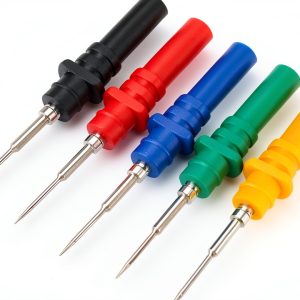 Oscilloscope Probes Walfront Pin Set with 20 Needles for Auto Repair
Reviews
There are no reviews yet.